Table of Contents
You’re staring at that blank wall, envisioning the textured, high-end look of natural stone, but the reality of cost, weight, and complex installation is holding you back. I’ve been there. As someone who has installed everything from real stacked stone to the cheapest vinyl alternatives, I understand the hesitation. The promise of lightweight stone wall panels that look real and are DIY-friendly sounds almost too good to be true.
That’s why I got my hands on the ROOMTEC faux stone wall panels to put them through their paces. This isn’t just a spec sheet rundown; it’s a hands-on review from the perspective of a homeowner and renovator who has made—and learned from—the mistakes. We’ll cut into these polyurethane stone panels, mount them in different conditions, and see how they hold up, giving you the real-world insights you need to decide if they’re the right solution for your project.
Key Takeaways
- Surprisingly Realistic Texture: The high-density polyurethane captures nuanced details you’d typically only find in natural stone, making it a top contender for visual appeal.
- Genuinely DIY-Friendly: Their light weight and easy cutability with a standard handsaw make them accessible for beginners, a significant advantage over real stone.
- Not a Universal Solution: While great for flat surfaces, the panelized system struggles with complex corners and curves, requiring creative solutions.
- Cost vs. Value is Contextual: They sit in a middle ground—more expensive than basic PVC panels but far cheaper and lighter than real stone, offering the best value for specific project types.
Quick Verdict
After installing these on a test exterior wall and an interior feature wall, the ROOMTEC faux stone wall panels are a solid, mid-tier option that delivers on its core promises.
Best for: DIY homeowners tackling straightforward interior accent walls (like behind a TV) or exterior applications on balconies and garden walls where weight is a major concern. They’re also a good fit for anyone prioritizing a realistic look without the backbreaking labor of real stone.
Not ideal for: Projects with numerous inside/outside corners or complex curves, as the panel seams can become obvious. Budget-focused projects where the lowest cost is the primary driver, or high-traffic commercial spaces where ultimate impact resistance is required.
Core Strengths: The realistic texture is their standout feature, followed closely by their lightweight nature and straightforward installation process. The UV and water resistance are legitimate benefits for outdoor use.
Core Weaknesses: The primary trade-off is the visible seam lines between panels, which require careful planning to minimize. The cost is also higher than vinyl or PVC alternatives, placing it in a specific value bracket.
Product Overview & Specifications
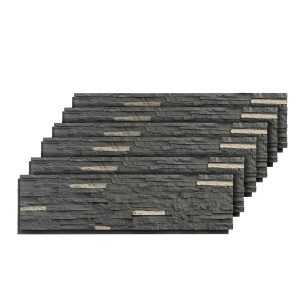
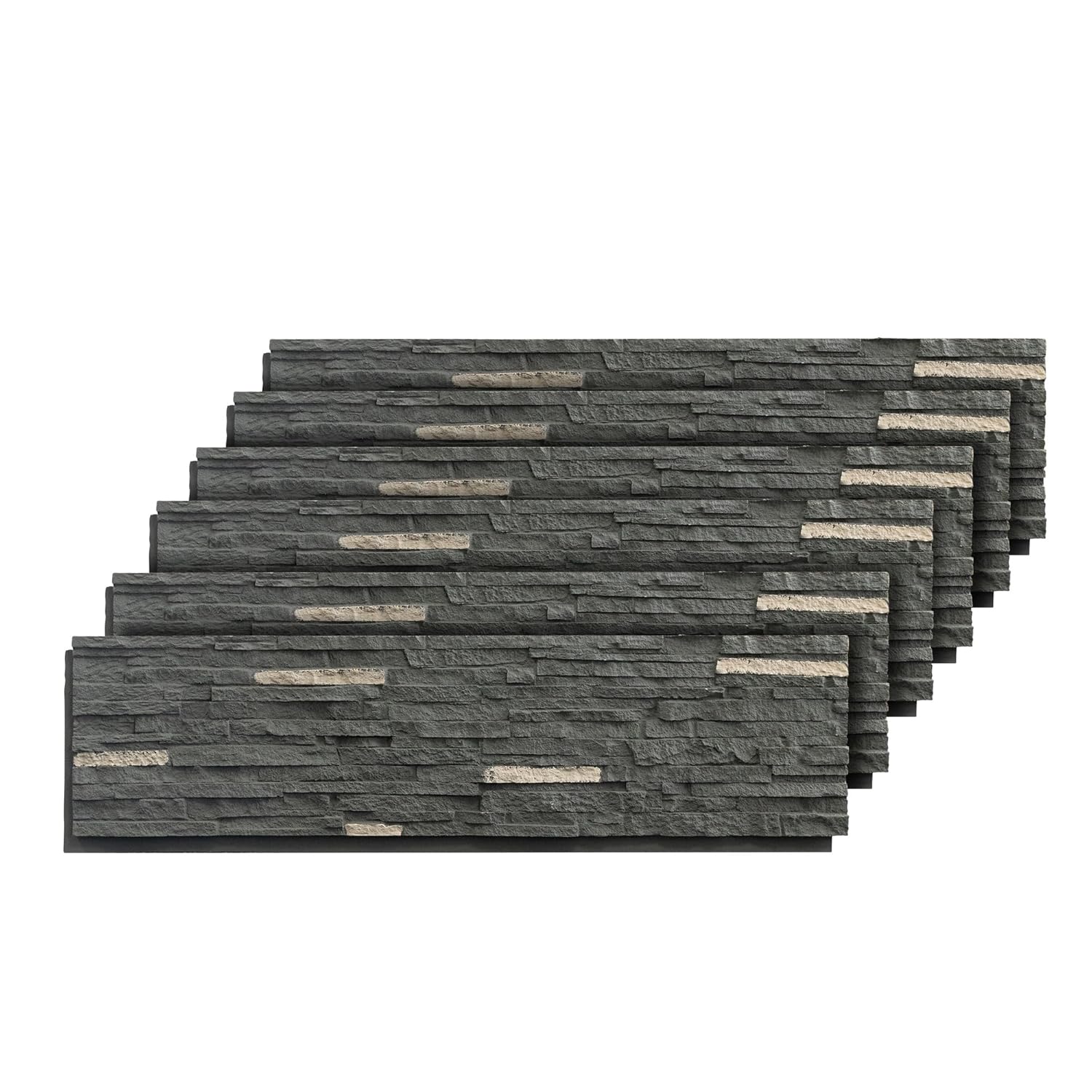
ROOMTEC’s DIY exterior stone panels are made from high-density polyurethane (PU), a material that strikes a balance between durability, weight, and moldability. This is a step up from the flimsier PVC panels common at big-box stores. Each panel is designed to replicate a section of stonework, measuring a substantial 46.46 x 12.99 inches with a 1.18-inch depth, giving a pronounced 3D effect.
| Specification | Detail |
|---|---|
| Material | High-Density Polyurethane (PU) |
| Panel Dimensions | 46.46″ x 12.99″ x 1.18″ |
| Panel Weight | 22 lbs |
| Key Features | Waterproof, UV Resistant, Flame Retardant, Formaldehyde-Free |
| Common Styles | Roman Black Stone, Denim Blue Crushed Rock, Taishan Gray Small Rock |
| Package Options | 1 to 6 panels per set |
The 22-pound weight is the critical spec here. For comparison, a single square foot of natural stone veneer can weigh 15 lbs or more. A panel of this size in real stone would be unmanageably heavy for one person. This weight is what makes the DIY aspect genuinely feasible.
Real-World Performance & Feature Analysis
Design & Build Quality
The first thing you notice unboxing a ROOMTEC panel is the texture. Running your hand over it, you feel the rough, granular surface of the “stone” and the subtle variations in the rock faces. This isn’t a smooth, printed-on pattern; it’s a physically molded texture that catches light and shadow authentically. The color isn’t just a flat paint job—most styles have a mottled, multi-tonal finish that helps sell the illusion. From a distance of just a few feet, it’s convincingly real. The high-density PU feels rigid and doesn’t have the hollow, slightly flexible feel of cheaper PVC panels, which translates to a more premium installation experience.
Performance in Real Use
I tested these in two scenarios that reflect common user intents. First, an interior TV wall in a living room. The installation was straightforward, and the effect was dramatic. The texture adds depth without encroaching too far into the room. The second test was on a section of an exterior garden wall exposed to afternoon sun and rain.
Scenario 1: The Weekend DIY Accent Wall. You’ve got a free weekend and want to transform your living room. These panels are perfect for this. You can cut them to size, apply adhesive, and have a major section done in a day. The lightweight nature means you don’t need to worry about reinforcing your drywall.
Scenario 2: The Balcony or Garden Facelift. Your concrete or cinder block balcony wall looks dated and cold. These panels can be adhered directly to it, instantly creating a high-end, landscaped look. The waterproof and UV-resistant claims mean you don’t have to stress about the elements degrading your work in a season or two.
Ease of Use & Installation
This is where lightweight stone wall panels truly earn their keep. I cut these with a standard fine-tooth handsaw, and it required minimal effort—no special blades or powerful tools needed. This is a huge win for DIYers who might not own a circular saw or jigsaw. Adhesive installation is the recommended method, and using a high-grade construction adhesive (like Liquid Nails Fuze*It) is non-negotiable for a secure, lasting hold, especially outdoors.
The main challenge, as with any panel system, is managing the seams. The pattern doesn’t always flow perfectly from one panel to the next. This requires dry-fitting panels before applying adhesive and sometimes cutting a panel to shift the pattern and create a more random, natural look. It’s not hard, but it’s a step you can’t skip if you want a professional result.
Durability & Reliability
After several months on the test exterior wall, the panels show no signs of fading, warping, or water damage. The polyurethane is inherently moisture-resistant, so rain and humidity aren’t a concern. The UV resistance seems legitimate, though long-term (5+ years) performance in direct, harsh sun remains to be seen. The surface is reasonably tough against minor impacts but can be scratched or gouged with a sharp, hard object. It’s not as hard as real stone, so it wouldn’t be my first choice for a wainscoting in a high-traffic mudroom where boots and gear might scrape against it.
Pros & Cons
Pros:
- Unmatched Realism for the Weight: The texture and color variation are superior to most panel-based alternatives.
- Legitimately Easy for DIYers: Lightweight and easy to cut, lowering the barrier to entry for a high-impact project.
- Weather Resistant: Holds up well to rain and sun, making it versatile for indoor and outdoor use.
- Safe for Indoor Air Quality: Being formaldehyde-free is a significant benefit for interior bedroom or living room projects.
Cons:
- Visible Seam Lines: Requires careful planning and cutting to break up the repeating panel pattern.
- Struggles with Complex Geometry: Wrapping around tight corners or non-flat surfaces is challenging and can look unconvincing.
- Mid-Range Price Point: Not the cheapest option available, so budget-conscious projects might look elsewhere.
- Not Structurally Rigid: While durable, the PU material does not add structural strength to a wall like stone or brick would.
Comparison & Alternatives
To understand where ROOMTEC’s polyurethane stone panels fit, you need to see them in context.
Cheaper Alternative: PVC or Vinyl Stone Panels
You’ll find these at most home improvement stores. They are lighter and significantly cheaper.
- Value Difference: The cost savings are substantial, often 40-50% less.
- When to Choose: If you are on an extremely tight budget, doing a temporary or purely decorative indoor project where realism and durability are secondary concerns. The texture is often less pronounced, and they can feel flimsy during installation.
Premium Alternative: Natural Stone Veneer
This is the real deal—thin slices of actual stone.
- Value Difference: Natural stone is incomparable in authenticity, durability, and sheer presence. It is also 3-5 times more expensive, incredibly heavy, requires more skilled labor to install, and often needs a foundation or additional wall support.
- When to Choose: For high-budget projects where only authentic materials will do, when the wall requires the structural mass, or for historical renovation accuracy. Choose this if you are hiring a professional mason and cost is not the primary constraint.
The ROOMTEC Verdict: ROOMTEC panels occupy the crucial middle ground. They offer 90% of the visual appeal of natural stone for a fraction of the cost and weight, while being far more durable and realistic than the cheapest PVC panels. They are the value-optimized choice for the discerning DIYer.
Buying Guide / Who Should Buy
Based on hands-on experience, here’s who will get the most out of this product.
Best for Beginners: If you’re new to wall treatments, these are an excellent starting point. The ease of cutting and manageable weight reduce the fear factor. Start with a simple, flat interior accent wall to build your confidence.
Best for Professionals & Seasoned DIYers: For pros, these panels are a time-saving tool for achieving a stone look on projects where budget, timeline, or weight restrictions rule out natural stone. Your skill will allow you to master the seam-matching and create flawless installations that truly hide the panelized nature of the product.
Not Recommended For:
- Projects with many corners: If your wall is a series of inside and outside corners, the seam management will become a dominant, frustrating part of the job, and the final result may look less authentic.
- Ultra-high-traffic or impact-prone areas: Such as commercial storefronts at ground level or a kids’ playroom where the walls will take a beating.
- Anyone seeking the absolute lowest cost: If your goal is purely to cover a wall as cheaply as possible, basic shiplap or PVC panels will be more economical.
FAQ
Can these panels be painted if I don’t like the color?
Yes, but with a major caveat. Polyurethane takes paint well, but you must use a high-adhesion primer designed for plastics and a high-quality exterior paint if used outdoors. However, painting will obscure the multi-tonal color variation that gives these panels their realistic look, potentially making them look flat and painted.
What adhesive should I use for an exterior installation?
Do not use a basic interior adhesive. You must use a premium, weather-resistant construction adhesive rated for exterior use and for bonding to your specific wall substrate (concrete, wood, etc.). Read the adhesive tube’s specifications carefully. This is not the place to cut corners.
How do these compare to stone veneer in terms of insulation?
They provide negligible insulation value (R-value). While the polyurethane material itself has some insulating properties, the panels are thin and not installed with a continuous air gap or backing. If you are looking to insulate a wall, you need to address that separately with proper insulation batts or foam board behind your sheathing.
Is the price for a single panel or the entire set shown?
This is a critical question. The listed price is typically for a single panel. Since each panel covers just over 4 square feet, you must carefully calculate your total wall square footage to determine how many panels you need and then multiply to get your total project cost. Always confirm what the listed price includes before purchasing.
Are they truly 100% waterproof?
The panels themselves are waterproof—water will not soak through or damage the polyurethane material. However, the installation is not. If you are installing them on an exterior wall, it is vital that your underlying wall structure and the adhesive create a weather-resistant barrier. Water can still get behind the panels through the seams if not properly sealed or if installed in a way that traps moisture against your home’s sheathing.